





Public space and bicycle
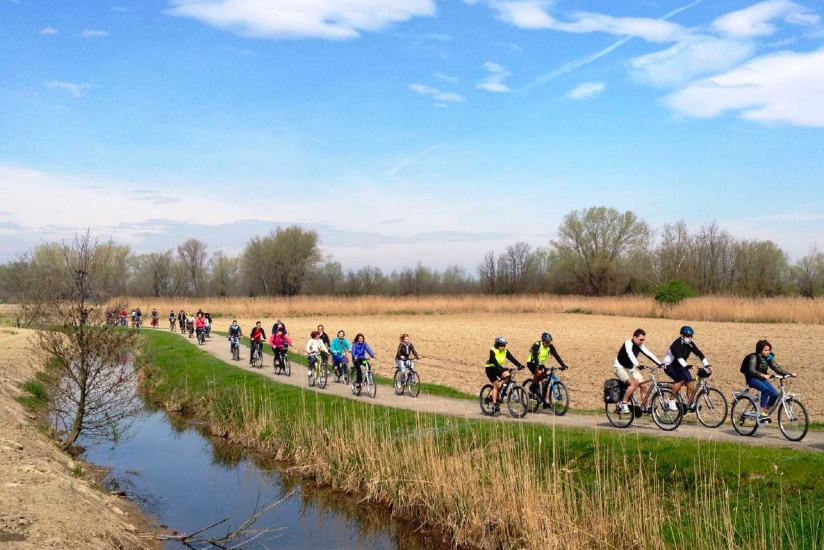
Cities and territories whose physical characteristics and roads welcome cycling mobility and generally promote active mobility offer in most cases a high quality of life for their inhabitants and determine a significant tourist and residential attractiveness. This happens for several reasons. On the one hand, the most cyclable areas in which the private car is used less offer better environmental characteristics, in terms of air quality, absence or reduced noise levels, less infrastructure and anthropization of the environment for transport purposes.
On the other hand, the conditions of public space that allow a spread of the use of bicycles are the same that increase the attractiveness of a territory both for residents (therefore their quality of life) and from a tourist and commercial point of view. In fact, the interventions for cycling and traffic moderation consist in many cases in the rebalancing of the spaces dedicated to the different means of transport and, consequently, in the (re)-creation of high quality spaces to enjoy free time, for the flourishing of commercial activities, for the reception of tourism and for the protection of local and circular economies.
This happens because well designed and built cycling spaces create safer roads as motor vehicles pass through them less and more slowly, encouraging those on foot to stop more willingly and for longer. So local shops attendance increases thanks to the greater flow of people, and families, children, the elderly and in general the entire population is encouraged to start using the "outside" part of their cities again.
From a tourist and commercial point of view, in particular, the most attractive areas of each territory are always those in which the transit and parking of motor vehicles are reduced (if not prohibited), because those who are on vacation and those who have to shop are looking for tranquility, pleasantness, easy accessibility.
This does not mean "eliminating the car" nor hindering its use; It means creating the best conditions for a mobility that promotes the sustainable economic development of a territory. It means that a road can serve different purposes, not only to "drain traffic" but also to welcome people and their desires.
It means that a street is not only a connection between a point A and a point B - a "corridor" of the house that is the Metropolitan City of Milan - but it is in itself a welcoming place, in which to stay and in which a significant part of economic, social and affective activities of its citizens take place, - a "room" of the house.
It means that it is necessary to intervene on the roads of a territory to make them not only safe, effective and efficient but also welcoming for all people regardless of the means of transport they choose to use and, ultimately, welcoming for a wide range of "non-transport" activities. This is not possible in the same way in any territory or in any context - every situation must be carefully analysed and the specific conditions evaluated. At the same time, the promotion of cycling and the creation of the spaces necessary for it can be one of the actions of economic, productive and tourist revival of a territory and one of the factors of its attractiveness for current and future residents thanks to the conditions of high quality of life that they are able to offer.