





Public space and bicycle
A territory in which public mobility spaces encourage and promote mobility by bicycle is also safe and welcoming for many other forms of mobility that do not find adequate space in "traditional" situations. In fact, the presence of separate quality cycle paths and traffic moderation works allow “widespread cycling”. These factors represent an advantage also because road space becomes more welcoming to many other roads users and other types of means of transport, whose popularity increased in recent years.
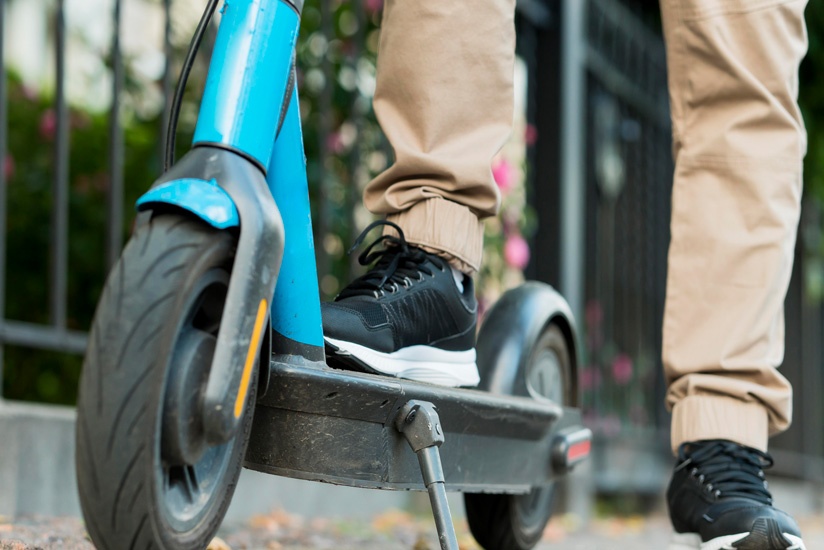
Various forms of so-called micromobility have spread in the last ten years but have not found, in most Italian cities, spaces suitable or dedicated to them and have therefore been used in promiscuity with road traffic. This causes important problems of safety (because of the great differences in mass and speed of the vehicles involved) but also of democracy of the road space: the road, in fact, is a public space that must be able to be used with the different means of transport and must be able to guarantee safety and pleasantness to all users.
The presence of quality cycle paths, with large sections, adequate flooring and in good state of repair, can further encourage the use of scooters, skateboards, rollerblades, monowheels and similar means.
Even if this user is marginal at the moment, the phenomenon is rapidly expanding all over the world and also in Italy, so it is important to provide adequate safety conditions for travel also to people who use these means. In addition, the greatest potential for micro-mobility (and for its truly sustainable use, so that it is not mainly replaced on foot) is in combination with other means, and in particular in intermodality with public transport (local or not).
The planning of cycling at the level of the Metropolitan City of Milan, therefore, will have to provide planning and performance criteria that allow the use of protected routes and in general of the entire road space also to all forms of micro-mobility other than bicycle.